 Add Row
  Add
Add 



Did you know? According to recent studies, permitting issues are among the top three reasons ADU projects are delayed or abandoned in Lafayette, CA. Missteps in understanding ADU size and setback rules Lafayette CA can turn your dream project into a costly headache. This guide puts the right information at your fingertips—so you can plan, apply, and build with confidence.
Unlocking ADU Success: Why Knowing ADU Size and Setback Rules in Lafayette CA Matters
If you’re considering building an ADU in Lafayette, grasping the city’s specific ADU size and setback rules will make or break your project. Lafayette sets local zoning and adu requirements that can override state standards—affecting everything from maximum square footage to where you can place an accessory dwelling unit on your lot. An overlooked setback requirement or confusion about attached versus detached ADUs can result in denied permits, wasted expenses, and months of delays. By learning the unique requirements for ADUs in Lafayette, you’re set up to maximize your living space or rental income without risk of code violations.
Even experienced property owners in Lafayette can be tripped up by evolving local regulations and the city’s approach to state mandates on dwelling units. Reading this guide now will help you see the road ahead: from property line setbacks to parking space rules and the finer points of building permit applications. Be among the successful Lafayette homeowners who navigate the permitting process efficiently and legally.
“According to recent studies, permitting issues are among the top three reasons ADU projects are delayed or abandoned in Lafayette, CA.”

What You’ll Learn About ADU Size and Setback Rules in Lafayette CA
- Key Lafayette ADU size limits, including maximum square footage by type (attached, detached, junior ADU)
- Critical ADU setback requirements and how they differ from state standards
- Step-by-step permitting process and common pitfalls to avoid
- Unique rules for accessory dwelling units in Lafayette
- Expert tips for a smooth ADU permit application

Overview: ADU Size and Setback Rules Lafayette CA
Building accessory dwelling units (ADUs) in Lafayette requires a clear understanding of the city’s unique size and setback rules. Whether you’re adding an attached, detached, or junior ADU, the right start begins with knowing how Lafayette’s zoning code applies to your property. This section covers the essentials—from what counts as an ADU to the differences between local rules and statewide mandates. The local Lafayette development code often includes more specific or stricter standards than California’s baseline, which means relying solely on state law may leave your ADU project exposed to setbacks during the permitting process.
Key considerations for Lafayette homeowners involve not just the maximum size of their ADU, but how many dwelling units can be added, how ADUs interact with existing structures, and whether requirements differ by lot size or location within the city. By comparing Lafayette’s rules with state law (see the table below), you can prevent the most common permitting errors and streamline your application for a building permit. Let’s look at how definitions and requirements play out for Lafayette specifically.
General ADU Requirements and Definitions Explained
Accessory dwelling units (ADUs) in Lafayette are secondary housing units on residential lots. They can be either detached ADUs—built separately from the main home—or attached ADUs—incorporated as new living space within or connected to the primary dwelling. There are also junior ADUs (JADUs), which have their own set of size and feature requirements, usually being no more than 500 square feet and carved from existing square footage.
The city defines ADUs by their physical connection, independent living facilities (like kitchen and bathroom), and potential rental use. A conversion ADU may involve repurposing an existing part of your property, such as a garage or basement, into a new dwelling unit. Each type has varying code, size, and setback requirements—making close attention to definitions important when applying for a building permit or planning your ADU project in Lafayette.
Key ADU Requirement Differences: Lafayette Versus California State Law
While California law provides a baseline for adu requirements—including minimum setbacks, parking allowances, and maximum square feet—Lafayette often enforces additional or stricter local codes. For example, California mandates a minimum four-foot side and rear setback for most ADUs, but Lafayette can extend requirements depending on lot shape, zoning, and neighborhood overlays.
Unlike the state, which may allow larger or multiple ADUs in some scenarios, Lafayette’s specific ordinances could restrict maximum size based on lot size or limit the square footage relative to the main dwelling. Differences like these underscore the importance of verifying Lafayette's local regulations before you begin building an ADU—or risk a rejected permit application or unexpected design changes down the road.
| Requirement | Lafayette CA (Local) | California State Law |
|---|---|---|
| Maximum Size: Detached ADU | Up to 850 sq ft (1 bed); up to 1,000 sq ft (2+ beds); larger may be allowed for new construction if lot size permits | Up to 1,200 sq ft (unless city restricts, but cannot mandate less than 800 sq ft for ADUs) |
| Maximum Size: Attached ADU | Up to 50% of main dwelling's floor area, not to exceed local caps (often 850–1,000 sq ft) | Up to 50% of main dwelling's floor area, up to 1,200 sq ft total, per state mandate |
| Junior ADU Size | Maximum 500 sq ft, must be part of existing dwelling | Maximum 500 sq ft, conversion of existing space |
| Setbacks (Side/Rear) | 4 ft minimum for detached/attached ADUs, with local enhancements possible | 4 ft minimum on side and rear for new ADUs |
| Front Setback | May be stricter per Lafayette zoning code—confirm with city | No state minimum; refers back to local standards |
| Lot Coverage/Minimum Lot Size | May apply; check Lafayette’s current ADU ordinance | No minimum lot size; only overall lot coverage applies |
Understanding Maximum ADU Size in Lafayette CA
The maximum size for your accessory dwelling unit in Lafayette depends on ADU type, lot size, zoning district, and sometimes, the size of your primary residence. Detached ADUs typically have a cap of up to 1,000 square feet, while attached ADUs are limited by a percentage of existing dwelling area. Junior ADUs, carved from existing homes, are capped at 500 square feet. If you’re unsure, always check Lafayette’s current ADU ordinance—these limits may evolve as city and state rules change.
Designing your ADU for compliance from the start not only safeguards your investment but also helps avoid time-consuming corrections during the building permit process. Keep in mind that some local rules may allow exceptions (such as larger units on bigger lots or with certain conditions met) but these require detailed review of your property’s zoning and a careful application to city planning. Let’s break down each type:
Maximum Size for Detached ADU in Lafayette
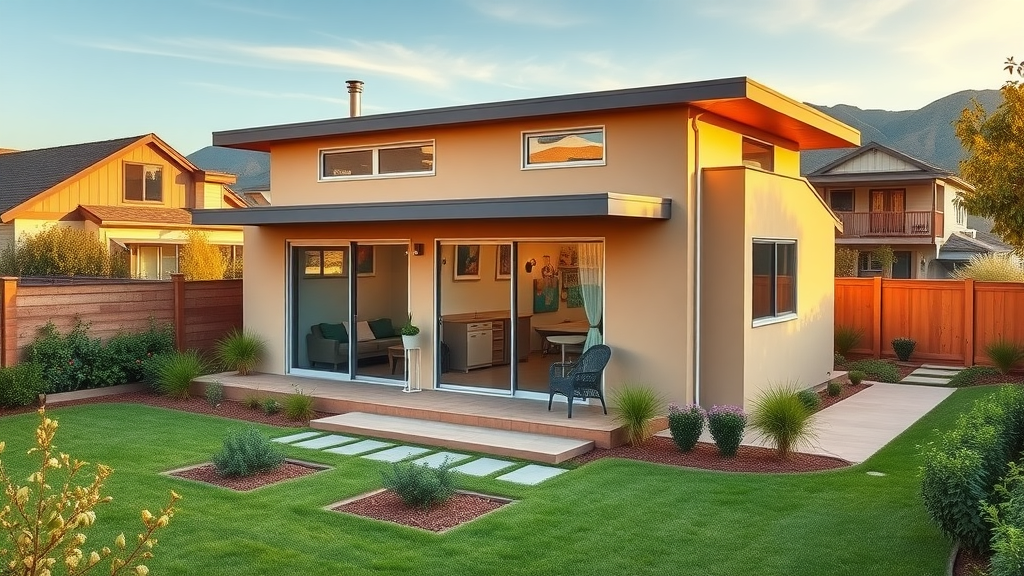
Detached ADUs can be built up to a maximum of 850 square feet for one-bedroom units or up to 1,000 square feet for ADUs with two or more bedrooms. In special cases—such as new construction on a larger lot—Lafayette may allow a detached ADU up to 1,200 square feet, but this is rare and subject to additional planning review. Always verify whether your lot qualifies before submitting a permit application. Lafayette’s limits are set to maintain neighborhood character while expanding living space options.
For property owners seeking rental income or multigenerational housing, choosing the right adu size can boost property value. But going beyond Lafayette’s adu requirements can result in a failed inspection or forced modifications. Striking the right balance between design goals and regulatory compliance makes the permit approval process much smoother for your adu project.
Size Limits for Attached ADUs and Existing Dwelling Units
With attached ADUs, size is determined by the existing structure. Lafayette allows up to 50% of your main home’s square footage to be used for the new accessory dwelling unit, with a typical maximum of 850–1,000 square feet according to the city’s zoning code. This limit helps ensure the ADU remains subordinate to the primary residence. For example, if your house is 1,600 square feet, an attached ADU could be up to 800 square feet (50%), unless your lot or zoning allows for more under the current ordinance.
Existing dwelling units used for a conversion ADU—such as a basement or attached garage—must comply with the same size limits as new construction. Confirm with the city planning department if you plan to build an ADU that uses both new and existing living space to ensure your application aligns with local adu requirements.

Junior ADUs: What You Need to Know
Junior ADUs (JADUs) are a special category in California and Lafayette alike, offering up to 500 square feet of converted space within an existing single-family dwelling. JADUs must be created from portions of your primary residence—and cannot be new construction. They must include an efficiency kitchen, but can share a bathroom with the primary home. Lafayette typically restricts JADUs to one per property and may have additional adu requirements regarding owner-occupancy and rental terms, so check the city’s current rules before starting your project.
Junior ADUs are ideal for homeowners looking to accommodate family, provide affordable rental options, or take advantage of state incentives for smaller units. Just like other ADU types, JADUs must comply with setback rules and may require full permit applications; skipping these steps can put your project at risk of removal or retroactive penalties.
ADU Setback Rules in Lafayette CA: Property Line and Lot Requirements
Setbacks refer to the required distance between your new ADU and the property line or other structures. Observing the correct setbacks is non-negotiable for your adu permit in Lafayette. State law establishes a four-foot side and rear minimum setback for most ADUs, but Lafayette can—and sometimes does—require more, especially for front yards or lots with unique shapes like flag or corner lots. The city’s goal is to ensure safety, privacy, and neighborhood cohesion while accommodating growth in accessory dwelling units.
Failure to meet the correct setback requirements can trigger costly redesigns or outright permit denial. It is essential to check your property survey and consult with the planning department—setback maps and ADU worksheets are available from the city and can save you hours (or months) of project delay.
Front, Rear, and Side Yard Setbacks for Building an ADU
For most properties in Lafayette, the required side and rear setbacks for a new or expanded accessory dwelling unit are at least four feet. However, some lots—especially those in special zoning districts or with unusual shapes—may require additional distance. Front setbacks are subject to the city’s standard street-facing rules, which may range from 15–25 feet or more, depending on the neighborhood.
If you plan to build an ADU near the property line, don’t assume the 4-foot rule applies in all cases; always verify with the city planner. Encroaching on property lines or easements can result in major setbacks (literally and figuratively) for your project. ADU placement also must not block access for emergency services or violate fire code clearance requirements—with exceptions only by formal city approval.
Minimum Lot Size and Dwelling Unit Coverage Restrictions
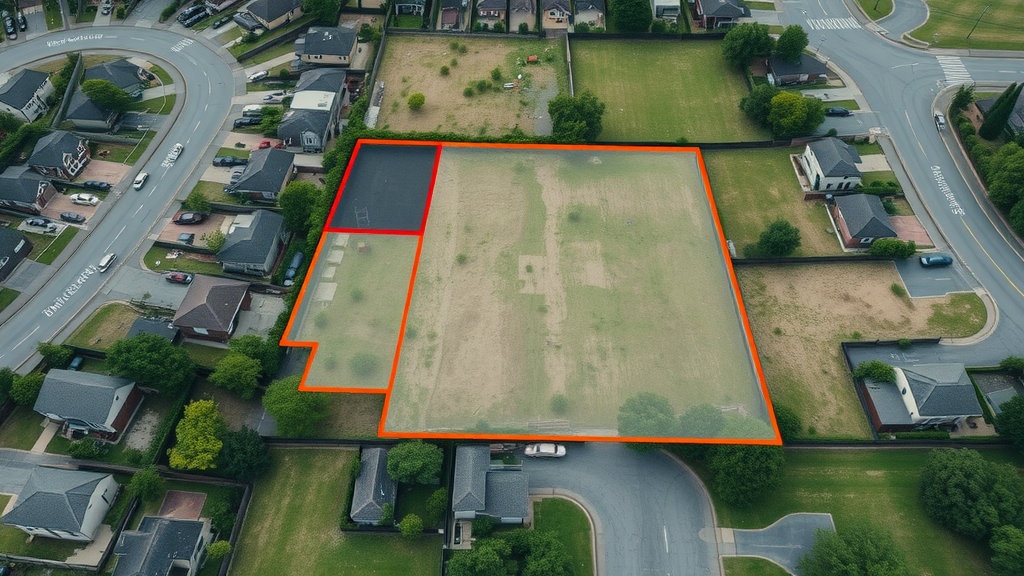
Lafayette generally doesn’t have a minimum lot size for ADUs, as per state law, but it may impose maximum lot coverage for residential parcels—meaning your ADU and other structures cannot cover more than a set percentage of the lot area (often 40–50%). If you’re already near your coverage limit, adding another dwelling unit may require reducing the footprint or revising your submission. For lots with challenging slopes, irregular shapes, or additional constraints (like protected trees or creeks), Lafayette’s planning staff will have the final say on what’s possible.
Check your property’s zoning for the most current lot coverage limits and consider having a surveyor provide a site map. Including this information in your permit application will speed up review and reduce the chances of last-minute surprises that derail your ADU project.
Navigating Permitting: Avoiding Common ADU Setback and Size Pitfalls
The permitting process in Lafayette requires careful documentation and strict adherence to adu size and setback rules. Missing paperwork, unclear site maps, or incorrect setback distances are among the main reasons ADU permit applications get delayed or denied. By following a checklist and working with professionals when needed, you can drastically reduce risks and keep your project on track from concept to final inspection.
Most delays occur when property owners “assume” compliance, rather than confirm their plans with city planners. Being thorough now means not having to retroactively modify your ADU later—which can be far more expensive and time consuming.
Permit Application Checklist: Building Permit, Site Plans, and More
Before you break ground, make sure you have:
- Completed permit application and ADU Worksheet (available from the Lafayette Planning Department)
- Dated and scaled site plan showing all structures, property lines, and setback distances
- Architectural drawings or blueprints for the proposed ADU
- Proof of parking compliance or exempt status
- Utility connection plans (gas, electric, water, sewer)
- Fire safety plans and, if necessary, additional documentation for hillside or environmentally sensitive lots
Double-check that all documents use the current forms and reflect the latest local adu requirements. Submitting a complete and accurate packet is the fastest way to get your building permit approved for your adu in Lafayette.

Top Setback Violations and How to Prevent Them
The most common setback violations include:
- Building too close to the property line (often due to misreading the site survey)
- Overlooking unique setback rules for flag, corner, or hillside lots
- Missing adjustments for shared driveways, powerlines, or utility easements
- Not accounting for accessory dwelling unit placement in relation to the main home and required open space
To avoid these missteps, use a licensed surveyor, consult Lafayette’s latest ADU guidelines, and schedule a pre-application review with the city planning department. Prevention is far easier—and less costly—than fixing errors after construction has begun.
Accessory Dwelling Unit Types: Attached, Detached, Junior, and More
- Detached ADUs
- Attached ADUs
- Junior ADUs (JADU)
- Conversion ADUs (garage/basement)
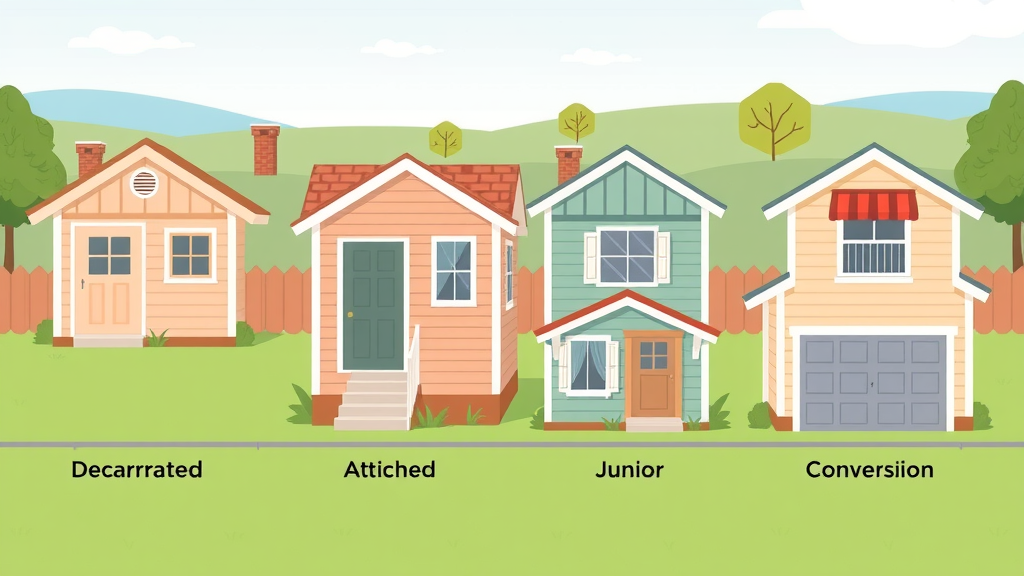
Each type of ADU (accessory dwelling unit) has distinct advantages and regulatory differences. Detached ADUs function as standalone units, maximizing privacy but facing slightly stricter size and setback codes. Attached ADUs integrate with the primary structure, often allowing better use of existing infrastructure but being limited by a percentage of the house’s square footage. Junior ADUs provide an affordable, lower-impact option and work well for multigenerational families or affordable rental space.
Conversion ADUs allow you to transform existing garages, basements, or accessory structures into living space, often leveraging “grandfathered” locations or utilities and potentially easier approval under Lafayette's codes. Choosing the right ADU type will depend on your goal, lot characteristics, and budget—as well as complying with all adu requirement differences.
Parking, Utility, and Building Code Requirements for ADUs in Lafayette
Parking, utility, and building code requirements are equally important aspects of any ADU project in Lafayette. The city may require at least one new parking space per dwelling unit, though exemptions apply if you’re close to public transit or converting an existing garage. Utilities must be separately metered wherever possible, and all accessory dwelling units must meet California Building Code standards—fire safety features, accessibility rules, and energy efficiency mandates included. Good preparation in these areas helps avoid last-minute permit snags or required upgrades during construction.
Accounting for all infrastructure needs also prevents post-construction disputes over access or use—especially important when adding rental income streams to your property. Be meticulous and transparent in your plans for utility connection, and confirm with the city’s building inspection staff before proceeding. This diligence speeds final approval and occupancy of your new ADU.
Parking Requirements for Accessory Dwelling Units
Most ADUs in Lafayette require the property owner to provide at least one additional parking space per new ADU. However, if you’re converting an existing garage or carport into an ADU, you are not typically required to add new parking as long as the property remains compliant with city code. Proximity to bus stops or BART stations, and specific historic district rules, may waive some parking requirements altogether. Check directly with planning staff to ensure your adu project includes the right number and type of parking spaces—or supporting waiver documentation in your permit application.
Failing to demonstrate adequate parking is a frequent cause for permit rejections and neighborhood pushback. Addressing parking requirements early smooths your pathway to approval and keeps relations positive with nearby property owners and your local HOA.
Utility Connections, Fire Safety, and Building Code Considerations
Every new accessory dwelling unit must have legal and safe connections to water, sewer, electric, and gas. In Lafayette, utility companies may require separate meters for ADUs, especially if the building will be rented out separately. Additionally, fire code requirements for access and sprinklers apply to all ADU types in certain locations. Your building permit application must show clear compliance with these requirements as well as accessibility standards for new construction.
Lafayette and California codes evolve, especially for seismic retrofitting and energy efficiency. Reviewing building code updates and consulting with licensed architects or contractors ensures no detail is missed. This will accelerate your project timeline and minimize the chance of costly corrections.
People Also Ask About ADU Size and Setback Rules in Lafayette and California
How close to the property line can I build an ADU?
In Lafayette, the minimum side and rear setback for most new ADUs is 4 feet from the property line, consistent with California state law. However, certain lots—like those on hillsides or in special zoning districts—may require greater setbacks. Always confirm with the city planning department before starting your project, as misjudging this detail is a common cause for adu permit denial or forced redesign after construction begins.
How close to property line can I build an ADU in California?
State law requires only a 4-foot setback from side and rear property lines for most ADUs throughout California. This includes both attached and detached ADUs, although local ordinances—like those in Lafayette—may override the state minimums with stricter front setback rules or additional requirements based on lot characteristics. For accurate, up-to-date information, check with your city’s planning office.
What are the setbacks for ADU in California?
California requires a 4-foot side and rear setback for new ADUs, but does not set a statewide minimum front setback for accessory dwelling units. Front setbacks are governed by local codes. Other setbacks may apply for fire safety, access, or utility easements, and some localities—including Lafayette—may enforce stricter setback requirements in certain areas or for specific ADU types.
How many square feet can an ADU be in California?
Under California law, a detached ADU may be up to 1,200 square feet, and an attached ADU can be up to 50% of the existing primary dwelling’s floor area (to a maximum of 1,200 sq ft). However, in many cities—including Lafayette—local planning codes limit detached ADUs to 850–1,000 square feet except under special circumstances. Junior ADUs are capped at 500 square feet statewide.
Expert Quotes: ADU Size, Setback, and Permitting in Lafayette CA
“Navigating Lafayette’s ADU permitting process takes careful planning, as local setbacks and max size rules can be stricter than California state law.” – Local ADU Design Professional
Lists: Common ADU Setback and Size Mistakes to Avoid
- Starting construction without confirming recent zoning changes
- Misinterpreting maximum allowable ADU size
- Overlooking unique setback rules for flag lots or corner lots
- Incomplete permit application packets
- Ignoring parking requirements for accessory dwelling units
Watch Now: Building an ADU in Lafayette – What Homeowners Need to Know
Key Takeaways: ADU Size and Setback Rules Lafayette CA
- Lafayette follows state law minimum setbacks but may impose additional requirements.
- Confirm the max square footage allowed for your ADU type and lot size.
- Avoid costly delays—double check setback maps and submit a complete building permit application.
Frequently Asked Questions about ADU Size and Setback Rules in Lafayette CA
- Do setback rules in Lafayette apply retroactively to existing dwelling units?
- Can I build an attached ADU above my garage?
- Are incentive programs available for converting garages to accessory dwelling units?
- What’s the average timeline for a permit application approval?
Conclusion: Plan, Apply, and Build Successfully Under Lafayette’s ADU Size and Setback Rules
Careful research and a thorough permit application prevent setbacks—literally and figuratively—when building an ADU in Lafayette, CA. Stay updated on local and state codes for hassle-free success.

Ready to Build? Get Expert Help with ADU Size and Setback Rules Lafayette CA
If you’re ready to start your ADU project, don’t risk avoidable setbacks. You can reach out to U.S. Accurate Construction at (925) 385-7099 for guidance, permit assistance, and a free consultation about your property in Lafayette.




Write A Comment